Showing posts with label second jobs. Show all posts

Tuesday, July 21, 2009

Delivery Charges, Massages & Other Ways to Earn Cash at Yard Sales

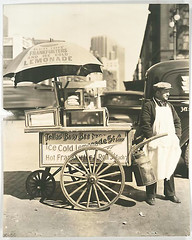
Sell food, set up a massage chair or display crafts. There's more to garage sales than second-hand merchandise, according to Kathryn Vercillo, of the Money Saving Blog. In this guest post, she offers suggestions about making extra money at yard sales.

Making Extra Cash at the Yard Sale

The most efficient yard sales are those that allow you to make easy cash with some bonus sales. In addition to selling your junk, you might offer the following items for sale:

• Beverages. It’s cheap to make lemonade or iced tea and people will be happy to pay you for a glass on a hot day.

• Snacks. You may consider buying some snacks in bulk and selling them for a markup during your sale.

• Crafts and artwork. If you’re crafty or artsy, then you may want to make some items for the sale. I know one artist who threw a bunch of her old Polaroids in a box and listed them for $1 each; a surprisingly large number of people bought some of these on a whim at her yard sale.

• Delivery charge. If you have large items available for sale then you may let people know that you’d be happy to deliver the item to them at the end of the day for a small fee.

• On-site services. Are there any services that you can provide to people who are at your place? For example, massage therapists may set up a chair and offer 15-minute massages for a fee.

• Future services. If you operate any type of business or provide any services, then make your brochures and business cards available during the sale. You just never know who might see them and want work from you down the line.

--written by Kathryn Vercillo of the Money Saving Blog, which was named one of the Top 20 British personal finance blogs earlier this year.

Related articles:

How to sell crafts
How to make lemonade

____________

Sharon is the author of the Frugal Duchess: How to Live Well and Save Money -- a coming of age memoir about money -- and a contributing writer in Wise Bread's 10,0001 Ways to Live Large on a Small Budget.


Wednesday, November 19, 2008

Cover Your Assets: 4 Ways to Protect Your Job

Feeling insecure on the job? Join the crowd. After watching friends, strangers and associates receive layoff notices, it's easy to feel nervous about the future. Bulletproof Your Job: 4 Ways to Stay Employed, by a Careerbuilder.com writer, provides excellent insights.
Writer Stephen Viscusi asserts that in this atmosphere, "You must understand that your job is your most valuable asset -- and your primary objective is to protect it."
--Bulletproof Your Job: 4 Ways to Stay Employed

Here are the four tips:
  1. Stay visible. Work long hours, dress well, pay attention to details and volunteer for projects.

  2. Be low-maintenance: Don't complain and watch your tongue.

  3. Volunteer: Network, be a mentor for younger employees, develop multiple skill sets.

  4. Have a Plan B: Save money, keep your resume current and join professional organizations.

My own advice: Develop multiple sources of income and revenue. Hobbies, second jobs and freelance projects can provide financial and professional cushions.

Related Posts:

Need a Second Job? Ideas & Strategies For Extra Money

Reformed Spenders Provide 10 Ways to Save in 2008

I Cashed My Check at the Bookstore: The Pits & Perks of Extra Money

_________________________________________
Here's how to buy my new book:


@ Amazon.com
@ Barnes & Noble
@ Borders
@ Target.com

Wednesday, July 30, 2008

Need a Second Job? Ideas & Strategies For Extra Money

Bartender? Seamstress? Tutor? Retail clerk? Those are a few of the second job ideas from CCCS that caught my eye. Here's the release:

'Katie Kozub of Cleveland, Ohio , earns extra income by bartending two nights a week. The flexibility allows her to spend time with family and she is able to pick the nights she works. Working parties and special events earn Katie more money. "The time goes by fast, you meet nice people, and it is a great way to earn extra money," said Kozub.

Kozub says each shift lasts three to five hours. "I earn a minimum of $120 extra, which is actually on the low end," she says. "The place is a nice bar connected to a restaurant and catering room, and is about 1 mile from my house. I have the option to work parties in the catering room, which brings me anything from $150 to $300 extra."


A second job can provide the income to make ends meet, jump start an emergency savings account, help reduce or eliminate debt, or provide the foundation for long-term goals, such as a child's college education or retirement.

Clients of CCCS offer their second job ideas to help consumers:

Use your talents - Take in sewing projects, tutor local students in math or other subjects, or use your love of cooking to make extra money. Offer to cook for co-workers for a fee or find a local construction site and seek permission to sell plates of food to employees. If you are an animal lover, offer dog walking or pet sitting services in your neighborhood.

Love the outdoors? - Make up and distribute a flyer offering to mow lawns in your neighborhood. If you are a sports lover, train to serve as an umpire or official at youth sporting events in your community. One CCCS client suggested stenciling house numbers on the curb for extra money. He suggests putting out a flyer and asking people to hang the flyer on their door on the day you will return. You can stencil even if they are not home and come back and collect payment. At $10 per house, you can easily earn $100 or more on a weekend morning.

Clean up at night and on the weekends - Many cleaning services have flexible evening and weekend hours for people interested in cleaning office buildings. If you prefer working for yourself, you might consider looking for a few clients and striking out on your own.

Retail flexibility and more - Retail work offers lots of flexibility for people who already have another job. You can look for work in merchandising, where you restock shelves after normal hours. Many inventory companies also use temporary and part time employees to conduct regular inventories of grocery stores and other retail outlets.

Love to shop? - Use your love of shopping as a mystery shopper or as a critic for movies, restaurants, or retail stores. Shoppers might also consider a second job at their favorite retailer. The discounts for staff at many clothing and other retailers can be considerable. Be careful that you don't spend your entire paycheck and more shopping for things you don't really need.

Benefit from the barter system - If you pay gym fees, perhaps you can get them waived by working a night or two a week at the front desk. Have lots of pets? Working at a veterinary clinic might get you discounted services for your furry friends.

Sell, sell, sell - Many clients offered stories about earning extra money by selling items on Ebay. Some seek items at local yard sales and shops to resell at a profit; others clean out items from their home. One family sells their used clothes to earn money for new clothes.

Go Green - Recycling can earn you extra money and you don't have to go dumpster diving to collect aluminum cans. Simply set up recycling boxes at your office and collect cans to be taken to the local recycling plant.

Work at home programs - Many jobs can be done from the comfort of your own home. Data entry, transcription services, billing, telemarketing, and data collection are all jobs that offer flexible hours and provide opportunities to earn extra income. When looking for jobs you can do from home, beware of programs that require you to pay a fee-they are not likely legitimate. Talk with friends and family members about opportunities they might know about for you to do projects from home.

Seek seasonal work - Whether it's working for a tax preparer in the spring or a retailer in November and December, seasonal work opportunities abound. These provide great opportunities to earn extra money without making a long term commitment to a second job.

Be creative - One client reported renting out driveway space to a neighbor that had too many vehicles. Others run errands for local seniors and provide babysitting services to families.

As economic challenges continue to loom, consumers are seeing food, fuel, and living expenses increase. Everything is on the rise-everything except incomes. "Salaries don't go as far as they used to for most families," said Jessica Cecere, president of Consumer Credit Counseling Service (CCCS) of Palm Beach County and the Treasure Coast. "Many are only a paycheck or two away from financial disaster."

source: CCCS

Wednesday, March 26, 2008

Improved Savings Plan: 9 Ways to Save More by Earning More

My upgraded business & savings model is based on a plan to increase the amount of money flowing into my house. As such, I've been trying to restructure our home finances for some time with more weight on the income side of the balance sheet.

In doing so, I'm taking the advice of Bo Bennett, author of the book, Year to Success . On "Day 130," of his program, Bennett offers his view of "A Better Way to Save." He argues that trimming fat and fluff from the family budget can only take you so far. It's a fiscal move with limited upside potential. "When you save money by 'cutting back,' you are working with limited resources." Your savings, Bennett says, is limited to your disposable income.


"Also when you save by cutting back, you are, in practical terms, reducing your quality of life," he says. Not everyone will agree with his logic, but Bennett argues that cutting out the little perks and luxuries of life can hurt our self-esteem and attitude.

As an alternative, Bennett recommends that we save more by earning more. Income sources:

1. part-time job

2. side business

3. business partnership or revenue affiliation on the Internet or some other vehicle

4. request a raise

5. expand your current business or customer base

To that list, I add the following:

1. Sell new stuff. I once read an article about a group of kids who made money by flipping toys on the Internet. The strategy: Buy new toys at steep discounts and sell the merchandise through e-stores or on eBay at higher prices. Buy low and sell higher.

2. Sell your old stuff: Garage sales, Craig's List or consignment stores are money-generating uses for the extra stuff in our closets.

3. Cash in on a hobby or a sports interest: Schools and community centers often pay decent wages to adults who coach after-school sports teams or provide after-school workshops. I know people who have made extra money by offering craft classes, computer workshops and sign language seminars through after-school or community programs.

4. Market areas of specialty: Small and mid-sized businesses need a variety of skills and services, including event planning and technical support. Some companies are willing to pay for quality-of-life services and programs for employees, including Yoga, Spanish or parenting classes. As such, some corporations invite professionals or experts to offer on-site workshops for the staff. Your skills may be ideal for a company-sponsored event or seminar.
__________

Digg!

Tuesday, December 11, 2007

What to Do After Losing a Job or Before the Pink Slip Arrives


How we deal with a job loss could mean the difference between a short-term setback and a financial meltdown. I found these helpful tips from Consumer Credit Counseling Service (CCCS) of Palm Beach County and the Treasure Coast. Some of the suggestions also apply if: 1) you already have a job; 2) are self-employed or 3) suspect that a pink sheet will soon be landing on your desk.

I especially like the first tip. I believe in diversified income sources. I've seen too many employees (ages 20-something to 50-something) who have been let go without much warning.


  • "Look for potential sources of additional income. If you have more than one wage earner in your household, look for opportunities to earn additional money through overtime. To help sustain your finances while you look for your next job, consider taking on part time or seasonal employment—it can provide both extra money and flexibility to go on job interviews.


  • "Contact local temporary agencies," suggests Christina Harrison, a certified credit counselor with CCCS. "They will match your skills with temporary employment available in your area. Some temporary assignments may also lead to full-time employment opportunities." Other industries that can provide quick employment include retail and food service, where training times are relatively short and schedules are somewhat flexible.


  • Review your budget. Take a realistic look at your monthly expenses and identify areas that can be reduced or eliminated. Entertainment costs are easiest to eliminate—skip lunches and dinners out and rent movies instead of going to the theater.


  • Review your cable and cell phone plans to see if the cost can be reduced. Consider foregoing them altogether—there may be a fee to cancel a contract, but it will likely be much less expensive than having monthly fees, late fees, and interest building up over time.


  • Prioritize expenses. After adjusting your budget, if you still can’t cover your monthly bills, pay the most important bills first. Your mortgage or rent payment should be the top priority, followed by car payments, insurance premiums and food. Notify your creditors right away if you are unable to make the minimum payments due on credit cards or other revolving credit. You may be able to get your interest rate reduced or your payment plan modified.
    Even if you can’t make a full payment, Harrison suggests paying something toward the debt. "Deferring or skipping payments increases the debt, extends the life of the debt, and will likely result in quickly mounting fees."


  • Try and avoid incurring any new debt. Resist the temptation to take cash advances on credit cards or to do business with small loan retailers, many who charge astronomical interest rates on the money they lend. While a home equity loan may help create a temporary cash flow, it has long term implications and is not recommended. If possible, avoid tapping into retirement accounts or your 401K, as the significant penalties and tax implications may far outweigh the temporary financial benefit.


  • Seek help. Utilize community resources to help bridge the gap. Emergency assistance for your utility bill may be available, and local food banks can help provide basic necessities. Contact your local United Way or your local 211 Information and Referral Service (dial 211) for information on emergency services available in your community.

  • Look into unemployment benefits. If you are unemployed through no fault of your own, you may qualify for unemployment benefits. The U.S. Department of Labor website has helpful information about qualifying and requesting unemployment benefits.


  • Plan for the unexpected. Even if you haven’t lost a job, it is a good idea to create a savings plan now that will help financially prepare you for any potential life-altering event. Make saving part of your budget, and set aside a portion of your income in a savings account until you have at least 3-6 months living expenses.


  • Work now to reduce and eliminate your debt and strive to maintain a budget that doesn’t involve spending more than you make. While it may not take away the pain that comes from losing a job, it can certainly provide peace of mind during a very stressful time."

Previous Posts Today:

5 Reasons Why I Have a Crush on My Parents' Retirement Magazines

______________

Digg!

The Frugal Duchess Booktique
The Frugal Duchess of Beauty Store

Book Shop of Fear
The Poetry & Drama Queen
Frugal Jazz & Blues
Frugal Comic Book Connection
__

Friday, April 06, 2007

I Cashed My Check at the Bookstore: The Pits & Perks of Extra Money

I loved my part-time job at Rizzoli bookstore in Manhattan. Located on 57th Street in Manhattan, the bookstore was a magnet for celebrities like supermodel Naomi Campbell and designer Karl Lagerfeld. I met several Broadway stars and other performers at Rizzoli. Working at that upscale bookstore expanded my grasp of music, literature and international news. And the store had great books, which was one of the perks and pitfalls for me when I worked there part-time.

Books at a discount represented a major problem for a bookworm like me. I often spent my entire paycheck at the bookstore. Why did I even bother cashing my check at the bank? I should have just signed it over to Rizzoli.

The same thing happened to me in Pittsburgh when I was hired to work part-time as a petite run-way model during the seasonal in-store fashion shows for the petite clothing line. On the day of the fashion shows, I received an employee discount. It was a generous discount and I generously shopped away my modeling paycheck at Saks.

Tired but Broke addresses that issue in a recent comment left on my post about part-time job opportunities.


"One thing I must add is that a part-time gig should not be at an establishment that will tempt you to spend the part-time pay check."--Tired but Broke

Of course, there are many perks of part-time jobs. This excellent piece from CNN.com. has a helpful list about part-time job perks. These benefits include:

1. Free tickets to cultural events (Ushers for plays, cinemas and museums).
2. Discount passes for theme parks or exhibits.
3. Employee shopping discounts: (books stores, clothing stores and other specialty retailers)
4. Free food: waiters and employees of catering firms, cafes and restaurants often get free meals.
5. Mentors: I've learned a lot from different co-workers at various part-time jobs.
6. Career advancement: I know of one bank executive, who began her career as a part-time receptionist during her college years. The contacts and knowledge that she acquired during her part-time stint led to a full-time, high-powered career move.
7. Extra money.
8. Enhanced time management skills: Anyone who works part-time while working or studying full-time becomes well-schooled on the ABCs of time management.
9. New skills: My son picked up extra organizational skills while working the cash register at a local pizza shop. Likewise, my stints as a part-time waitress also taught me a lot about efficiency and focus.
10. Appreciation. A second job really opened my eyes to the difficult tasks my parents faced while working extra hours in addition to their full-time professional careers as educators. Working along side seasoned cashiers,waitresses and clerks also made me sensitive to the financial difficulties faced by minimum wage and low-salaried employees, who work full time in stores, restaurants and other jobs. They often do a lot of work for little pay.

Here are the other part-time income stories I've written:
Different Types of Part-Time Jobs
How to Make a Part-Time Job Work: Tips from My Dad
How to Make a Part-Time Job Work: Tips From College Students
Putting Extra Paychecks to Work


______________


Digg!

The Frugal Duchess Booktique
The Frugal Duchess of Beauty Store

Book Shop of Fear
The Poetry & Drama Queen
Frugal Jazz & Blues
Frugal Comic Book Connection
__

Thursday, April 05, 2007

Putting Extra Paychecks to Work

Over the last two weeks, I've written several posts about managing part-time jobs. But what about the extra paycheck? Here are a few tips based on my own experience and research.

  • Save the part-time pay in a separate account, says my friend Cynthia, who works in a doctor's office in the day and at Dippin' Dots at night. A separate account keeps the extra paycheck from disappearing. The accumulated savings builds momentum,which makes it easier to save. The money feeds itself.
  • Have a long-term goal. My friend Cynthia is working to pay off student debt. She lets about three months of extra paychecks accumulate in a special savings account and then applies the lump sum to her student loan balance. It's easier, she says, to see progress with this strategy. My father worked extra jobs to help pay for the new home my family built when I was a kid.
  • Pay bills: Extra paychecks can be used to pay specific monthly bills.
  • Emergency repairs or expenses.
  • Buy household items. Replacing our shrinking supply of cutlery was low on my priority list, but we really needed a new set. Therefore, I used a second-source income check to purchase a new set of flatware from an online vendor. Because the replacement set did not come out of our normal budget, the cutlery felt like a free gift when it arrived via UPS.

These links also provide helpful info about managing extra or second income:

Key Bank recommends setting up priorities.

CNN has a helpful piece about using your part-time job to get extra perks.

Tomorrow: Extra Paycheck Traps to Avoid


Here are the other part-time income stories I've written:

Different Types of Part-Time Jobs

How to Make a Part-Time Job Work: Tips from My Dad

How to Make a Part-Time Job Work: Tips From College Students
______________

Digg!


The Frugal Duchess Booktique
The Frugal Duchess of Beauty Store

Book Shop of Fear
The Poetry & Drama Queen
Frugal Jazz & Blues
Frugal Comic Book Connection
__

Sunday, April 01, 2007

How to Make a Part-Time Job Work: Tips From College Students

What's the best strategy for working part time while taking either grad school or under grad classes? I asked that question to several students. My husband -- who attended full-time classes and worked part-time shortly after our second child was born -- also provided some tips. In earlier posts, I've provided tips from my Dad, who often worked several jobs during my childhood.

FLEXIBILITY

"I picked a job where they were flexible about working around my schedule," said my husband Avi, who worked at a latte cafe while attending full-time classes for an interior design degree program.

As an undergraduate, Lisa Ibanez, of Hialeah, worked up to 20 hours a week for two years in the infant room at a preschool affiliated with the University of Miami.

“I changed diapers. I gave bottles. I prepared food,” recalls Ibanez, who is now a grad student at UM.

She enjoyed working with children and appreciated the flexibility of her on-campus assignment, which enabled her to easily shift between classes and work. As a graduate student, she now works on campus as a research assistant and enjoys the same level of flexibility that she encountered during her undergraduate years. Campus-based employers are also lenient during mid-term and final exam periods and make accommodations during academic crunch periods.

“All of the people knew that we were students first and employees second,” says Ibanez.


RISE EARLY

Alex Jean-Jacques, a work-study student from Hollywood, Florida: As a senior at Broward Community College, Jean-Jacques works six to eight hours a day in the school’s financial aid office in downtown Fort Lauderdale.

On a typical Tuesday, for example, he wakes up at 4:30 am to lift weights and prepare for an 8:00 am class on campus. By 10, he reports to the Financial Aid office, where he works until 4:30 pm. After a three-hour evening class, Jean-Jacques studies until midnight. It’s a long day, but the perks of campus employment extend far beyond the paycheck.

“I’m able to learn more and gain more experience, especially while working in an office,” says Jean-Jacques, who hopes to be an architect.

HAVE FUN & MAKE THE MOST OF YOUR COMMUTE

"I also picked a job where I had fun," my husband Avi said. "I'm real social. Working in a coffee shop wasn't a tremendous hardship to me."

He also picked a part-time job that was near his school and he really used his commuting time to study. He took the bus (cheap transportation) and used the bus ride to read for class.

THE ABC'S OF WORK-STUDY PROGRAMS

For many students work-study programs bridge the fiscal gap between professional aspirations and the five-figure annual costs of higher education. Most colleges and universities offer a diverse mix of work-study programs, which provide student workers with a paycheck, work experience and flexible schedules. The various programs involve federal, state and private funds.

Under the Federal Work Study program, the U.S. government provides colleges and universities with the funds to cover up to 75 percent of the cost of work-study salaries. Individual schools finance the remaining balance of the student payroll. Students can apply for the Federal Work Study program by filling out the Free Application for Federal Student Aid (FAFSA). Work-study grants are awarded based on need, but students are urged to apply early for the federal program because of limited funds.

PAY AS YOU GO: THE ANTI-DEBT PLAN

Work-study programs are an earn-as-you-go opportunity to help students pay for their college education,” said Marcia Conliffe, Associate VP of Student Success & Enrollment Management Services at BCC. “By earning money to cover their educational expenses, students are not forced to borrow as much in student loans that will need to be repaid after graduation.”

TAPPING INTO MENTORS

Many of the students, I chatted with worked second jobs that provided mentors and resume experience for their post-school careers.

Catalina Castillo, a second -year student and a psychology major, works three hours each day in the media relations department where she tracks, files and distributes newspaper articles about Miami-Dade College and its affiliated programs. The job pays $6.40 an hour and Castillo says that the office experience provides excellent training for her future career as a psychologist.

Miami-Dade College also participates in Florida Work Experience Program, a state program that reimburses private companies that hire MDC students. Using state funds, Miami-Dade College reimburses employers 70 percent of the cost of student salaries, according to Luis Betancourt, MDC’s director of Work Programs. On behalf of the school, Betancourt actively recruits local companies to participate in the work-study program, including law firms and other professional services companies.

“The companies cut costs and save money, and the students get a foot in the door,” Betancourt says. “You have students working alongside people who might possibly become mentors.”


______________

Digg!

The Frugal Duchess Booktique
The Frugal Duchess of Beauty Store

Book Shop of Fear
The Poetry & Drama Queen
Frugal Jazz & Blues
Frugal Comic Book Connection
__

Friday, March 30, 2007

How to Make a Part-Time Job Work: Tips From My Dad

Many of us work part-time jobs in order to pay bills, cut debt or to build up savings accounts. -Last week, I wrote about different part-time jobs. But working extra hours is a really chore if you also have other careers and competing commitments.

Here are a few tips about fitting part-time jobs into a full schedule.

My Dad, for example, worked full-time as a teacher and school administrator during the day. At night he worked different jobs in restaurants, a store and even on a ship dock unloading cargo.
He used these strategies to make his second job work:

1. Keep track of the uniform. Most second jobs involve a uniform or some kind of dress code that is very different from our 9-to- 5 wardrobe. My Dad kept his waiter's uniform in the car or in his locker during the school week. This strategy made it easier for him to make a quick change with minimal effort. Time was a precious commodity because after the school bell rang, my Dad worked until midnight several days a week.

2. Arrive at the second job a little early, my Dad advises. Getting to work ahead of time gave him a little time to freshen up, change and relax.

He's right. I learned that lesson the hard way. During my first year in New York, I worked at Editor & Publisher magazine from 9 to 5. In the evenings, I worked in a restaurant until 11 pm.
After leaving the magazine, I would stretch out at home as long as possible: Bad move. That stay-at-home until the-last-second plan was not relaxing. I was always scrambling and harried.

3. Remain focused on financial goals. Working a second job is easier if you constantly remember your financial goals, such as paying off debt or saving for a house, my Dad says.

The extra job "was just something that had to be done," he says. "I was just determined and put my mind to it."

4. Take care of yourself. "You must mentally prepare yourself and get as much rest as you can," my Dad says.

In future posts, I will provide tips about working a part-time job while attending school and tips about saving the extra paycheck.
______________

Digg!

The Frugal Duchess Booktique
The Frugal Duchess of Beauty Store
Book Shop of Fear
The Poetry & Drama Queen
Frugal Jazz & Blues

__

Thursday, March 22, 2007

Working at Dip 'n Dots for Debt & Other Part-Time Job Tips

A neighbor (in her 20s) was wearing a Dip'n Dots uniform while walking her dog. I was puzzled by the ice cream store uniform.

"I thought you worked in a doctor's office," I asked her.

"Still there. Dip 'n Dots is my part-time job," she explained.

She works a second job in order to pay off a student loan and auto debt. Her part-time work experience reminded me of the recent post from Tired of Being Broke , a 20-something writer who has recently posted about a second job that is used to pay off student loans. I've also held a long series of part-time jobs to pay my bills. Indeed, finding a second job to pay off debt or to make ends meet is one of the moves recommended in the book Help! I Can't Pay My Bills by Sally Herigstad, a contributing writer on MSN Money.

When I lived in Manhattan during my 20s, I worked for Editor & Publisher magazine during the day and I worked at a restaurant at night. During my New York years, I also worked part-time as a book store clerk and shoe model. I found my various jobs through contacts, roommates and luck.

  • waitress: I found this job based on a tip from a roommate
  • shoe model: Tip from a waitress
  • book store clerk: I saw the sign while reading in an upscale bookstore.

My parents, especially my Dad, worked in the Public School System by day and worked different part-time jobs at night. My Dad worked in restaurants, a night club and even on a ship dock, where he unloaded cargo. (My parents even worked second and third jobs while attending graduate school). The extra money helped pay for our new house in the suburbs, family vacations, education and other costs associated with raising four children.

Next Thursday, I will provide tips from my dad and my neighbor about how they managed money, time and family while working two jobs. Here are coping strategies that worked for me:

  • Pick a second job that is either near your home or near your first job. A short commute reduces transportation costs and gives you extra time to chill. In New York, I was able to walk to the restaurant where I worked in the evenings.
  • Work for a flexible company: I always made sure the managers of my part-time jobs knew that I also had a full-time job. Sometimes -- but not always --their awareness provided me with a little more slack. They looked the other way if I showed up a few minutes late or if I needed extra time during a break. I didn't abuse their kindness.
  • Get to know your co-workers. I often swapped shifts with other co-workers and we also covered for each other in different situations. Fellow workers were also a good source of job leads, workplace tips and other insights. For instance, during one of my blue-funks, a middle-aged woman who worked the cash register told me: "When it begins to haunt you like that, you have to let it go." And now, about 20 years later, whenever I start to obsess about some problem or scenario, I think of my co-worker's advice.

This article has information and links about finding a part-time job.

______________

The Frugal Duchess Booktique
The Frugal Duchess of Beauty Store
Book Shop of Fear
The Poetry & Drama Queen
Frugal Jazz & Blues

__